With few exceptions, for the past 29 years, my wife Fran and I have journeyed northwest from Kansas City to Kearney, Nebraska. A few times we’ve questioned the wisdom of traveling to the middle of Nebraska in March when winter is still hanging on by its frozen fingernails. But, wise or not, we do it to witness one of the great migratory gatherings on earth.
On an approximately 40-mile stretch of the Platte River between Grand Island and Kearney, more than half a million Sandhill Cranes pause on their trip to nesting grounds as remote as Siberia. They stop to feed, building up their reserves for the long flight north—and dance.
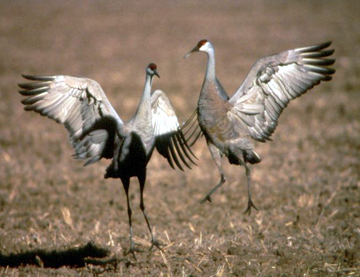
As with humans, the cranes’ dancing is a mating ritual (and, apparently, given their robust and even growing population, an effective one). Nebraska’s Platte River and the fields and marshes lying on either side of it provide a much-needed stopover for about 80 percent of the Sandhill Cranes in the world. The cranes, like millions of other birds, follow the Central Flyway on their way north every spring. It’s a long, exhausting and risky endeavor, but, hey, they’re birds. They don’t know or care why they do it. They just have to. Their bodies say go, and they go.
Fortunately, they also have built-in mechanisms to help them stay alive long enough to make new birds. Each morning, they rise from the relative safety of the river’s shallows and sandbars in a mass mini-migration to the fields. There, they feed on pretty much anything that catches their attention, such as leftover grain, insects and meatier fare, including small animals. Their tendency not to be picky probably explains why, according to NebraskaFlyway.com, they gain around 15 percent of their body weight during their six-week R&R on the Platte.
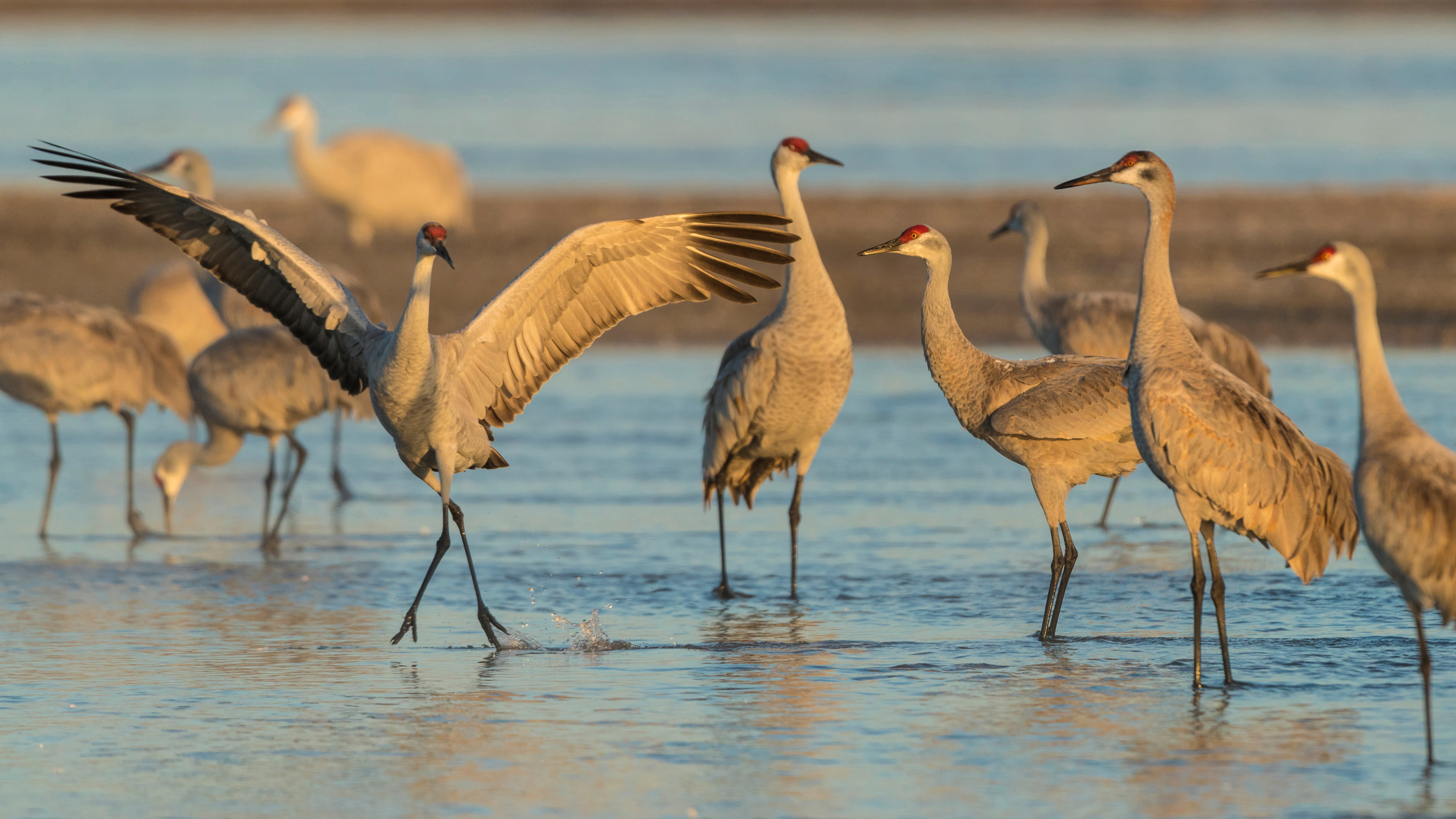
One thing these birds like to do, including as a part of their dance ritual, is throw stuff. During a dance, they’ll spread their wings wide, leap up from the ground and, when they alight, bow. But for some reason, during courting, says the National Audubon Society’s Birds of North America, they’ll run around, pull up tufts of grass and toss them. They do the same thing when they’re building a nest. Both the male and the female find material for the nest. Then they throw it over their shoulder so it lands in the same area. The female is left to tidy the new place.
From before dawn until it’s dark, if you’re outdoors, there’s no escaping the the sound of Sandhill Cranes when they gather along the Platte. It’s reminiscent of a giant cocktail party, with everyone talking at once and nobody listening. But then, all these birds have come a long way and landed safely where there’s plenty to eat and dancing all day long. That’s reason to celebrate.
Three places to see when visiting the cranes: the Iain Nicolson Audubon Center at Rowe Sanctuary, the Crane Trust Nature & Visitor Center and the Museum of Nebraska Art in Kearney. That is, If it’s possible to go inside when thousands of cranes fill the sky.
This is the thirteenth, and last, in a series of posts focused on the birds featured in my new novel, Discovery. Watch for the book when it’s released March 28, 2025, from Better Than Starbucks Publishing, betterthanstarbucks.org.
I’m not sure whether I scared it off or it decided at the last second that its iprey was too big to carry off, but the owl swooped in for the grab and, like a plane whose pilot suddenly decides not to land, rocketed back up and disappeared into the darkening forest. The intended victim was one of our two family dogs. Looking back, I’m not certain it was a Great Horned Owl. It might have been a Barred Owl, which is a little bit smaller. They both look plenty big at dusk or dawn when they’re hunting in the semidarkness.
Our dog’s close encounter with two sets of powerful talons ended well for the intended victim who seemed oblivious to the bloody fate it had just escaped. The Great Horned Owl’s soft feathers render it almost silent in flight. Its relatively short wings make it easier for it to avoid obstacles in the forest where it usually prefers to live and hunt.
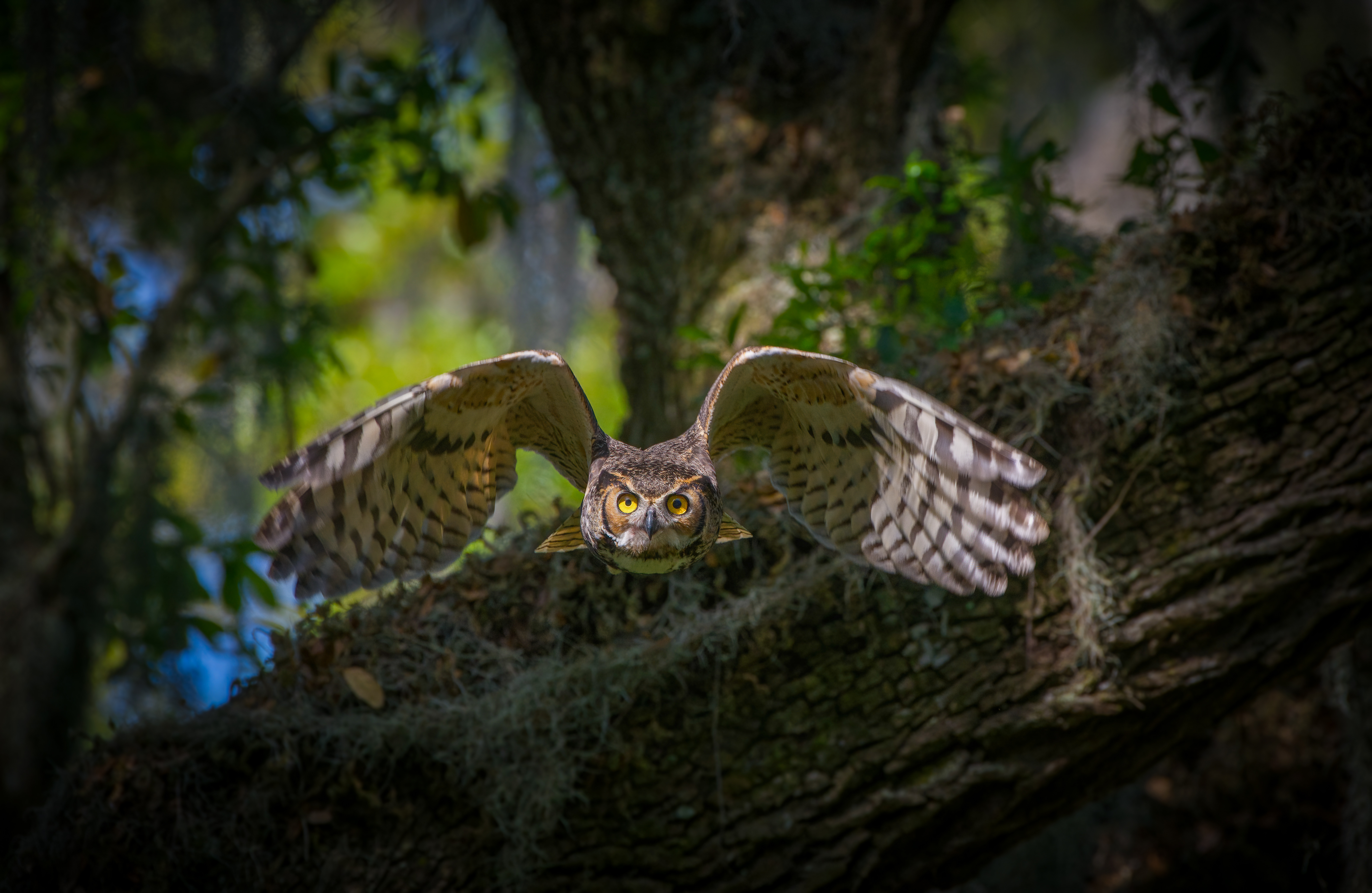
The objects of Great Horned Owls’ hunting trips don’t usually include dogs, but they do enjoy a meal of smaller animals, like rodents. (By the way, did you know that ground squirrels in California have started hunting, killing and eating voles, which are also rodents? Owls should be careful. The little hairy-tailed rats might turn on them one day. Come to think of it, maybe we should be a bit wary, too.) These owls will also prey on other large birds, such as Ospreys and other owls.
One of the Great Horned Owl’s favorite foods is the American Crow, and the crows work hard to keep the predators at bay. They’ll gather in large groups when they detect an owl’s presence and harass the enemy for hours on end, according to allaboutbirds.org.
You’ll find Great Horned Owls just about anywhere in North America, including cities and suburbs. They even live in the desert, where they’ll use cliff ledges for nesting.
If you’re out on your deck on a February or March night and hear a scream, wait a little bit before calling the cops. If you hear a similar scream again, it’s likely a female Great Horned Owl defending her nest. These birds don’t care how cold it is. They’ll lay eggs in the middle of winter anyway.
You’ve probably heard that owls can turn their heads 180 degrees. It’s certainly true of the Great Horned Owl. It can spin its noggin a little more than halfway through an Exorcist rotation. One thing it can’t do is give you the side-eye. It’s eyes, while great for seeing at night, can’t move in their sockets.
So, if your pet weighs five pounds or less, it’s probably not a good idea to let it outside alone. Great Horned Owls are fond of cats, in particular. And keep an eye out for gangs of carnivorous ground squirrels. Death by hungry squirrel is just too embarrassing.
This is the twelfth in a series of posts focused on the birds featured in my new novel, Discovery. Look for another one each week. And watch for the book when it’s released March 28, 2025, from Better Than Starbucks Publishing, betterthanstarbucks.org.
In scientific parlance, the Turkey Vulture goes by the title Cathartes aura, meaning something like “purifying breeze” or “golden purifier.”
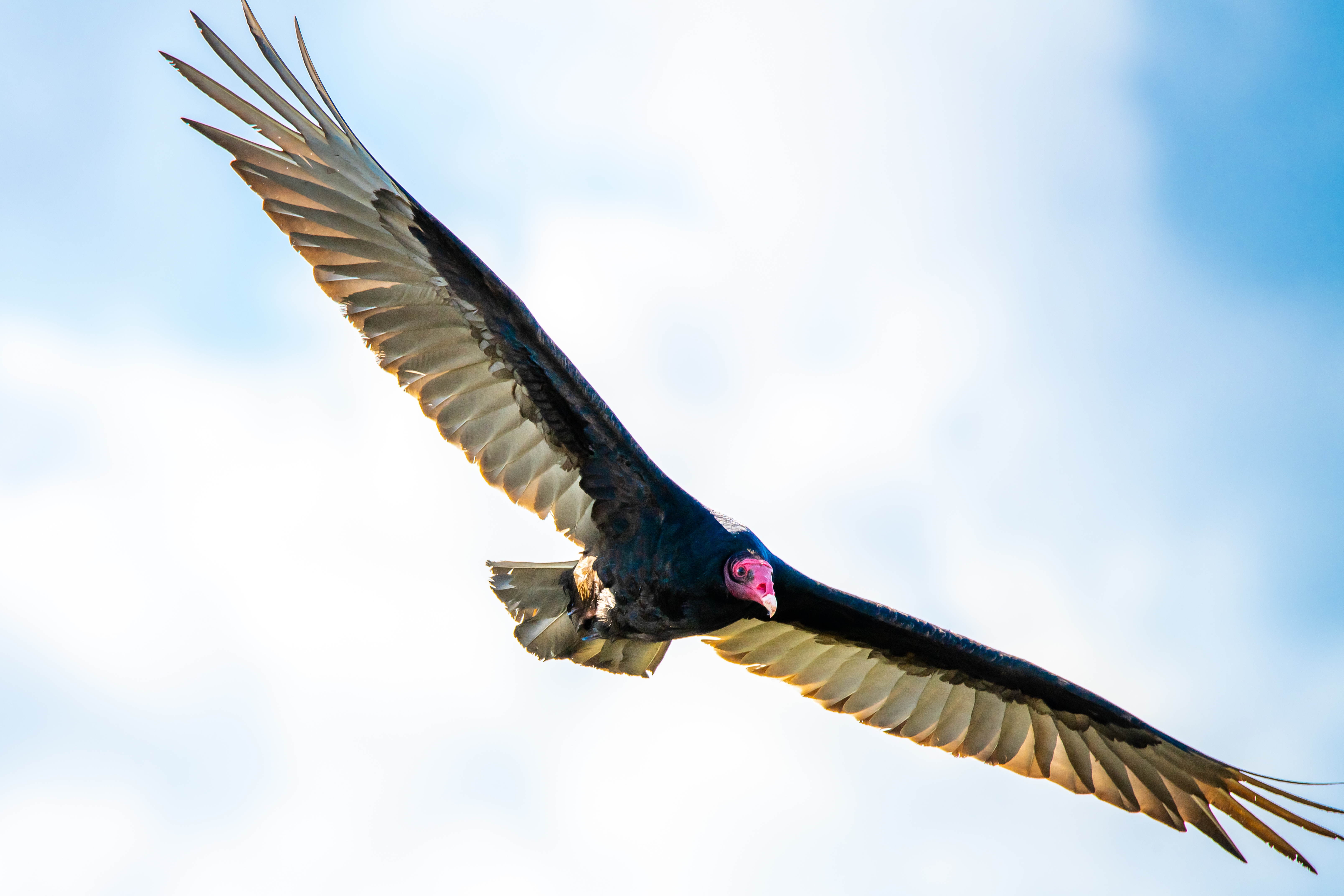
Okay. It’s hard to argue with the purifier or purifying part, but “breeze” and “golden” make for a tough sell. First, there’s no gold to be found on a Turkey Vulture, unless you count the translucent part of the wings as in the photo below. If you’ve ever seen a Turkey Vulture soaring, you know what I mean. Second, any breeze coming off one of these birds would not be pleasant.
Let me explain. Turkey Vultures eat carrion—that’s dead, rotting animals to you and me. It’s an important occupation in a society with many automobiles and many miles of highway. Vultures serve as the roadkill cleanup crew and generally keep things tidy. On the other hand, when the weather turns hot, they poop on their feet to cool off.
I know. Sounds kind of counterintuitive. I’m not sure how it works, either, but I trust allaboutbirds.com when it says it’s true. Still, you see what I’m getting at when I mention the breeze: Carrion. Poop feet. Breeze. I don’t want to be downwind. I also don’t want to irritate a Turkey Vulture by getting too close. They’re known to use vomiting as a defense. Given what they eat, I’ll bet it works more often than not.
In flight, when they’re within sniffing distance of the ground, looking for their next meal with their powerful sense of smell, Turkey Vultures look as though they’ve been enjoying a few too many aperitifs. They hold their wings in what’s called a shallow dihedral, or V-shape, and rock back and forth, something like a drunk conventioneer negotiating the tables and chairs in a ballroom.
But it’s the Turkey Vulture’s head that deserves the most attention. In a word, it’s ugly. There’s no getting around it. In adults, it’s bald, red and wrinkly. Think of your angry uncle at Thanksgiving dinner and add a big, yellow beak made for ripping apart a carcass. Not a pretty picture but one you might keep in mind if you need a laugh next Turkey Day.
That naked, red head isn’t just for show, though. It does serve a purpose. It allows Vultures to “dig in,” so to speak, without collecting a lot of rotten gunk in their head feathers while they’re dining. They also have strong stomach acid, so they’re able to ward off diseases they might otherwise contract from carrion. In other words, they’re well-equipped to clean up after your Volvo.
It’s small wonder that, as allaboutbirds.com explains, the Turkey Vulture population in North America. increased 1.8% per year between 1966 and 2019. Given that the number off cars and trucks on the road, just in the U.S., in 1966 was 92.9 million and, in 2022, 283.4 million.
This is the eleventh in a series of posts focused on the birds featured in my new novel, Discovery. Look for another one each week. And watch for the book when it’s released March 28, 2025, from Better Than Starbucks Publishing, betterthanstarbucks.org.
You would be excused for thinking of the Violet-green Swallow as the jewel among its kind. The name is appropriate, at least for the male, with its almost iridescent green across the shoulders, down the back and over the head, along with the wash of violet on the wings and descending from the base of the tail. It looks like some mad artist decided to throw paint around and created astonishing beauty out of colors that shouldn’t go together.
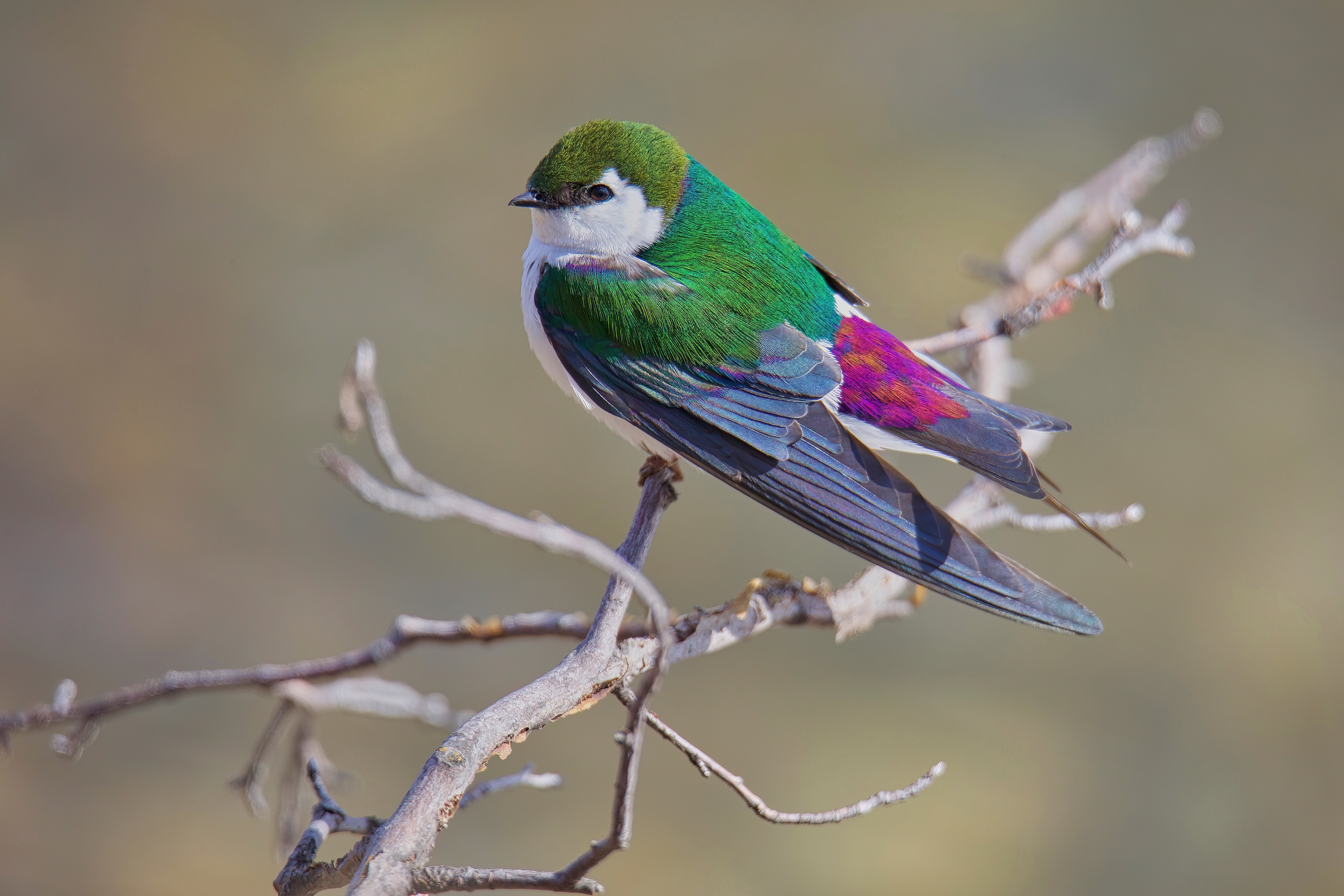
You might not agree, and I don’t care. I’ve made my stand.
Leaving aside this small swallow’s pulchritude, the bird has some other things going for it. It’s fast, for one thing. According to allaboutbirds.org, it can fly 28 mph, which compares favorably with the notoriously speedy Peregrine Falcon. Of course, you have to take into account, that this is the falcon’s speed when its just ambling along at its normal flight rate. When it “stoops” to capture its prey—most often another bird—the dive can reach about 240 mph. A Violet-green Swallow would be left in the dust or maybe be lunch.
Like other swallows, the Violet-green puts on an acrobatic show when its in the air. The ability to twist and turn comes in handy for a bird that depends on flying insects for food. Perhaps it’s also an asset when Peregrine Falcons and other hungry predators get too close.
Unlike some other birds—Cuckoos and Cowbirds come to mind—Violet Green Swallows do not lay their eggs in other bird species’ nests and leave them for strangers to raise their kids. In fact, in one documented instance, a pair of swallows helped a pair of Western Bluebirds with their chicks, guarding the nest and taking care of the babies. When the young bluebirds left for college, the swallows took over the nest and raised their own brood.
Gives co-parenting a whole new meaning. I love allaboutbirds.org and its fun facts.
In the summer, you’ll find Violet-green Swallows throughout much of the western continental United States, as well as western Canada and much of Alaska. Some of them make a year-round home along the California coast.
Wherever Violet-green Swallows are and whatever they’re up to—breeding, feeding, migrating, just hanging out—they want to do it in groups, sometimes of several hundred. They like to nest in cavities, so that puts them in competition with other cavity-nesting birds like House Sparrows, a species transplanted from Europe that has taken the nation by storm. Fortunately, the number of cavities seems adequate to give most pairs a place to have babies and keep the sky populated with winged jewels.
This is the tenth in a series of posts focused on the birds featured in my new novel, Discovery. Look for another one each week.
Wikipedia—that font of all knowledge—tells us that the number of miners who found gold during the Klondike Gold Rush in western Canada numbered no more than 4,000. A paltry few hundred got rich for their efforts. Ironically, maybe, Golden-crowned Sparrows watched it all go down. And they had a comment about the madness: a plaintive three-note song that the miners came to interpret as “no gold here,” or, as if in sympathy for the wasted labor of a good many, “I’m so tired.” The sparrow’s forehead was as close as the vast majority of miners came to striking the mother lode.
Finding facts about the Golden-crowned Sparrow is almost as difficult as discovering gold in the Klondike. If you visit https://allaboutbirds.org—and I strongly recommend you do—you’ll learn that this robust sparrow is among the songbirds we know the least about. It provides a research opening for an enterprising grad student.
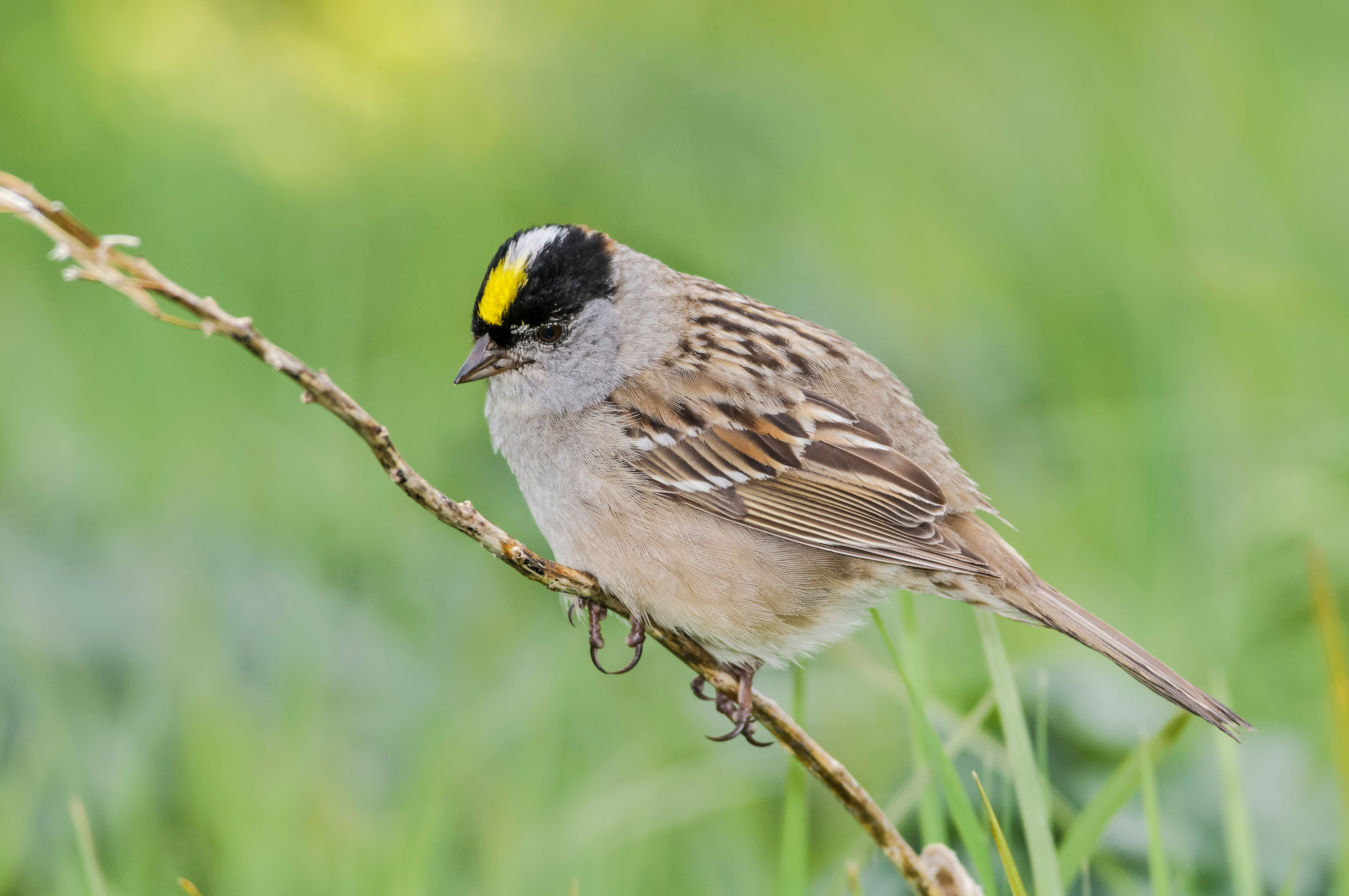
Although it rarely ranges as far east as Colorado and even the southwest corner of Kansas as well as much of Texas, Golden-crowned Sparrows reside mostly in California during the winter. Like many other migratory birds, they breed on the tundra, where, in addition to spending time with family and friends, they apparently enjoy taunting human beings who dream of getting rich quick.
They also seem to be a bit ambivalent about their breeding grounds. They’re not like the other bird species who populate the tundra during the summer to make sure their species keep going for another year. Golden-crowned Sparrows leave earlier and stay away longer, taking in that California vibe.
I’m not one to gossip, but there’s a rumor—actually much more than a rumor—that Golden-crowned Sparrows and White-crowned Sparrows have been engaging in some hanky-panky. And there are photos! Not of the actual hanky-panky but of the hybrid offspring. You’ll find them at https://ebird.org/species/x00053.
So we’ve established that Golden-crowned Sparrows were not a favorite of Klondike miners. They like California in the winter. And at least some of them mess around on the tundra with White-crowned Sparrows in the summer. Aside from their affinity for California in the winter and their affinity for birds not of their species, we don’t know that much.
A few other tidbits have come to light over the years. For example, Golden-crowned Sparrows:
- Like many kinds of seeds as well as buds, sprouts and insects
- Sometimes forage with White-crowned Sparrows in the summer, perhaps laying the groundwork for a liaison over dinner
- Build their cup-shaped nests on the ground or in low trees or shrubs
- Assign the gathering of nest material to the female
- Leave it to the male to tag along with the female, encouraging her by singing, “I’m so tired.”
- Form monogamous pairs
- Have been seen cheating
- Have lots of predators to watch out for, including feral cats. several kinds of hawk, owls, shrikes and one species of ground squirrel
It’s a dangerous world out there. Maybe that’s why Golden-crowned Sparrows seek a little fun where they can find it.
This is the ninth in a series of posts focused on the birds featured in my new novel, Discovery. Look for another one each week.
Among the birds that visit our thistle-seed feeder in the winter, White-crowned Sparrows are among my favorites. They don’t object to eating other birds’ dropped seeds off the ground, and their bold, black-and-white “crown” looks pretty snappy. They’re also feisty. For some reason, they don’t like Dark-eyed Juncos or Chipping Sparrows encroaching on their territory and will chase them away, while they let Fox Sparrows and other birds have the run of the place. I don’t know where this antipathy comes from, but I’m sure the sparrows have their reasons. It’s probably some long-ago misunderstanding that turned into a permanent feud, like the Hatfields and McCoys. Fortunately, to my knowledge, there have been no deaths or serious injuries attributed to the fight.
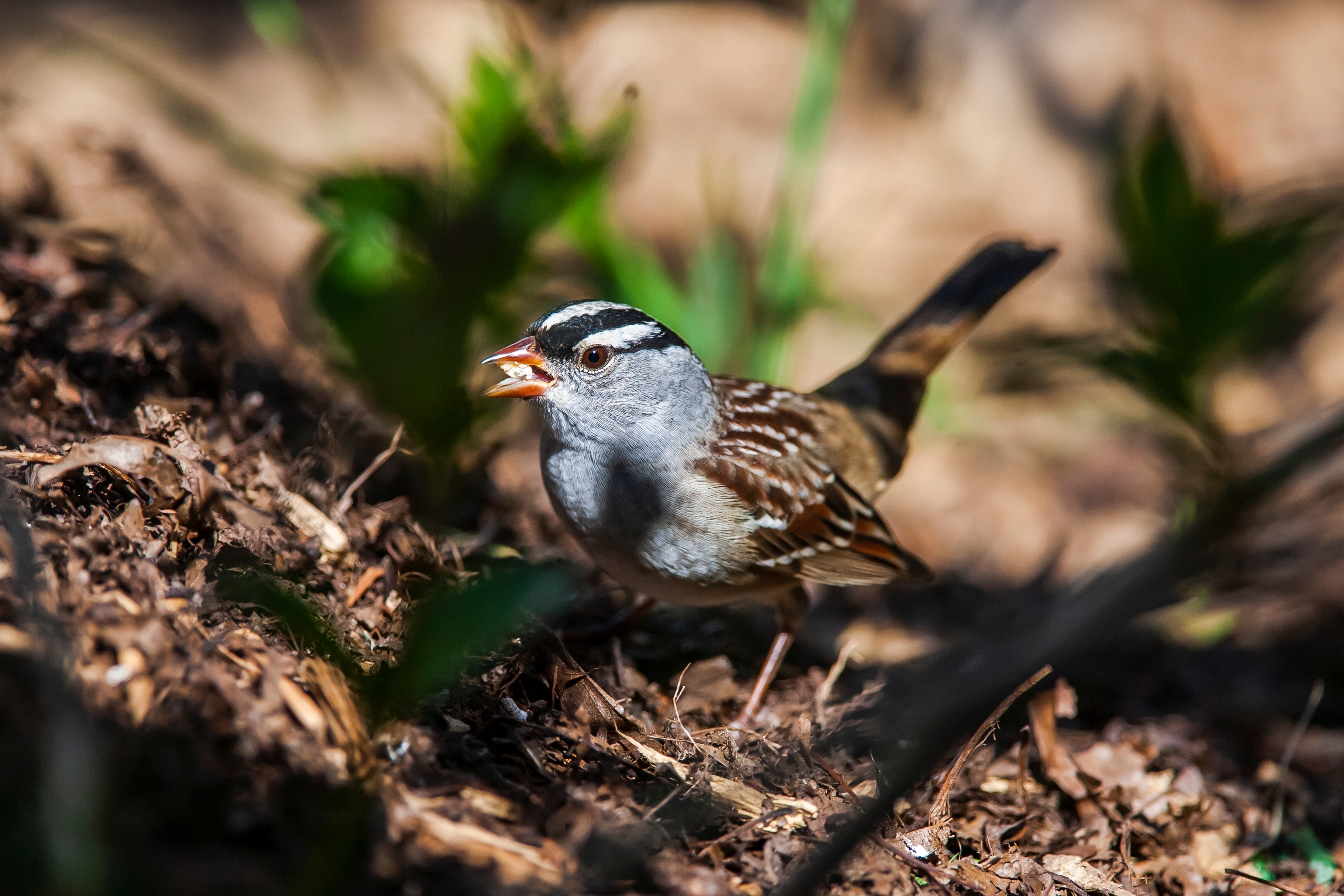
White-crowned Sparrows occur throughout North America, although they’re rare in far-southern Florida, for some reason. Most of them migrate, but some remain year-round in the western mountains and along part of the West Coast. According to allaboutbirds.org, White-crowned Sparrows from Alaska fly all the way to Southern California—about 2,600 miles—to wait out the winter. One bird flew 300 miles in one night.
Just as humans who speak the same language develop different dialects, so do White-crowned Sparrows. Which dialect they use when they sing depends on where they’re raised. It’s like saying
“warsh” instead of “wash.” My mother always said “warsh,” a product, I’m sure, of being born and brought up in central Kansas. I can still hear it: “Go take a bath, and be sure to warsh behind your ears.”
If male White-crowned Sparrows grow up in an area between two dialects, they might be able to sing in both. I wonder if being bilingual improves their mating prospects. But maybe not.
“Oh, Sidney, sing me a love song. . . .
“No, not that one. Try again. . . .
“That’s better. . . .
“Wait, who have you been singing that other crap to, you two-timing creep?”
Perhaps this source of potential conflict has something to do with why a group of White-crowned Sparrows is sometimes called a “quarrel.”
Male and female White-crowned Sparrows look alike. That striking crown makes them easy to identify. If they’re in mixed flocks with White-throated Sparrows, they’re the ones without the white throat, so the ID is still pretty simple. Also, White-throated Sparrows are less common to begin with.
Short advertisement: My novel, Discovery, will be available March 28, 2025, at betterthanstarbucks.org. You can learn more at discoverynovel.com.
This is the eighth in a series of posts focused on the birds featured in my new novel, Discovery. Look for another one each week.
At a high school football game, when I was a few years younger, a fight broke out between two boys. One was tall, and the other seemed about half his size. Yet the small one taunted the tall one and jumped to strike him in the face again and again. I don’t know what brought the duel on or which one started it. But I can imagine what was going through the tall guy’s mind.
“If I hit this kid, I’m in trouble.” The people in the crowd surrounding the two combatants would call him a bully and tell him to pick on someone his own size. If he walked away, he’d be labeled a coward. Either way, he’d lose. Now, years later, I wonder who was the real bully. I guess it depends on who started the fight. If it was the tall boy, I’m all for the little guy. If it was the shorter kid. . .well, not so much.
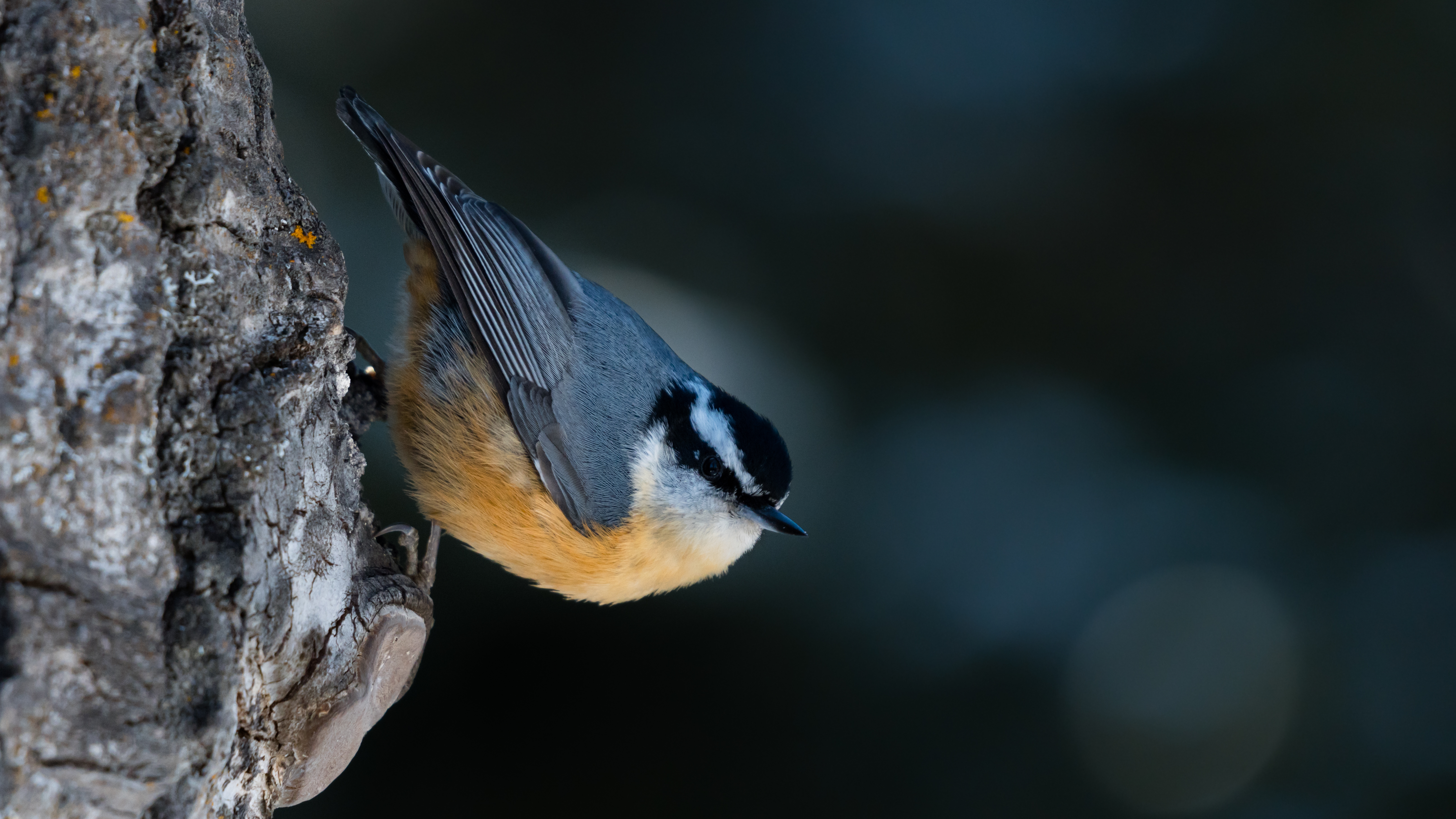
Which brings me, finally, to the Red-breasted Nuthatch. It’s a tiny bird with a big attitude. Mind you, I’m making no moral judgments. Why would I? It’s a bird, for Pete’s sake.
During nest building, Red-breasted Nuthatches will chase larger birds away, attacking them quite aggressively. They also have no qualms about swiping construction materials from other birds’ nests. In short, they’d make a poor choice for a children’s story about the virtues of sharing. Maybe that’s why there are so many of them, and their population appears to be growing. Its range covers most of North America, year-round in the western mountains, Great Lakes region, northeastern states and eastern mountains.
Red-breasted Nuthatches do seem to get along with other birds when they’re hungry. They’re often found in mixed flocks with chickadees and a variety of small birds, moving along the trunks and branches in all different directions, looking for insects hidden in the bark.
Described as a “nasal yammering” by allaboutbirds.org, the Red-breasted Nuthatch’s call is a good way to identify it. Of course, the rusty underparts are a giveaway, as is the bold, black line reaching from the base of the bill to the back of its very short neck.
Tool use among birds isn’t common, but Red-breasted Nuthatches have figured out how make a trowel out of a bit of bark. They use the chip to apply tree resin inside and outside the hole they excavate for nesting. The male takes care of the outside, and the female decorates the inside. The sticky stuff might deter other birds from trying to take over the nest or predators from attacking. Nuthatches avoid the resin by diving through the opening.
Seeing Red-breasted Nuthatches here in Missouri is a treat. They sometimes show up at our feeders in the winter. Maybe because they aren’t nesting then, we haven’t yet witnessed their penchant for pugilism.
This is the seventh in a series of posts focused on the birds featured in my new novel, Discovery. Look for another one each week.
No bird should be able to walk underwater, especially against the current of a mountain stream. And no bird should resemble a small balloon. Yet there’s the American Dipper. Dippers look like some demented cartoonist’s version of a house wren. They even have the upright tail, at times. But they’re almost entirely gray. Their song would be almost pretty, if it weren’t for the interspersed sounds of a zipper.
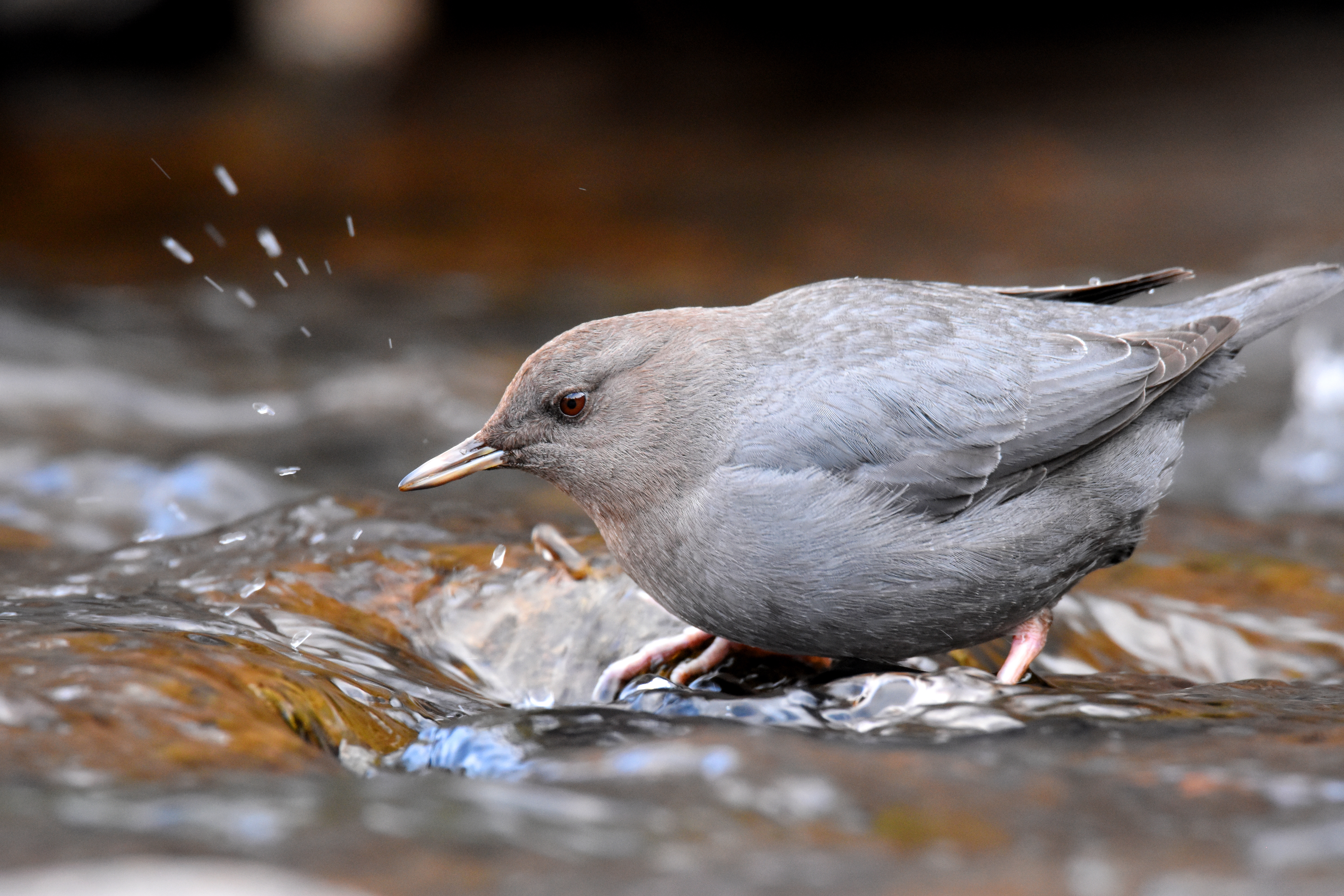
I first saw this ridiculous creature when my family vacationed in Colorado. There was nothing like it back in Kansas, where I was born, and it took me a moment to believe what I was seeing — a small, dark bird on a rock in the middle of a rushing stream, bobbing up and down as if it suffered from some kind of tic.
Then it dove headfirst into the water, where I was sure it would be swept away. Instead, I could see it turn around and start walking on the gravelly bottom. I watched as it picked at the creek bed, seeking, as I found out later, the aquatic larvae that somehow managed to survive the frigid snowmelt.
Unlike ducks, grebes and other birds that find their food below the water’s surface, Dippers are not aquatic birds. They’re songbirds, like robins and cardinals and sparrows. They are, in fact, “North America’s only truly aquatic songbird,” according to allaboutbirds.org. Of course, their uniqueness doesn’t cancel their absurdity.
But you have to admire a bird that can let adversity wash over it the way Dippers do in their quest for sustenance. Maybe the bugs taste better when you have to face down the rushing current and bear the numbing cold. If you’ve ever dipped your toes in a mountain stream, you know what I mean. Dippers are equipped for the cold, though. They’re able to survive and thrive, even in winter, because their metabolic rate is low, and they have lots of feathers, even on their eyelids. Their blood also carries more oxygen than other birds’.
You have to respect a bird that manages to overcome its unfortunate looks and odd behavior to become ruler of the brook. Also, Dippers are just so much fun to watch. Look for them in cold mountain and coastal streams thoughout western North America, as long as the water is clean.
This is the sixth in a series of posts focused on the birds featured in my new novel, Discovery. Look for another one each week.
One of the names for a group of Common Ravens is “unkindness.” I suppose that’s better than a “murder” of Crows, the Raven’s smaller relatives. It might already have been assigned to these large birds when they gather, but I think a “nevermore” of ravens has a nice ring, as in “Quoth the raven, ‘Nevermore,” from Edgar Allan Poe’s famous poem, “The Raven.”
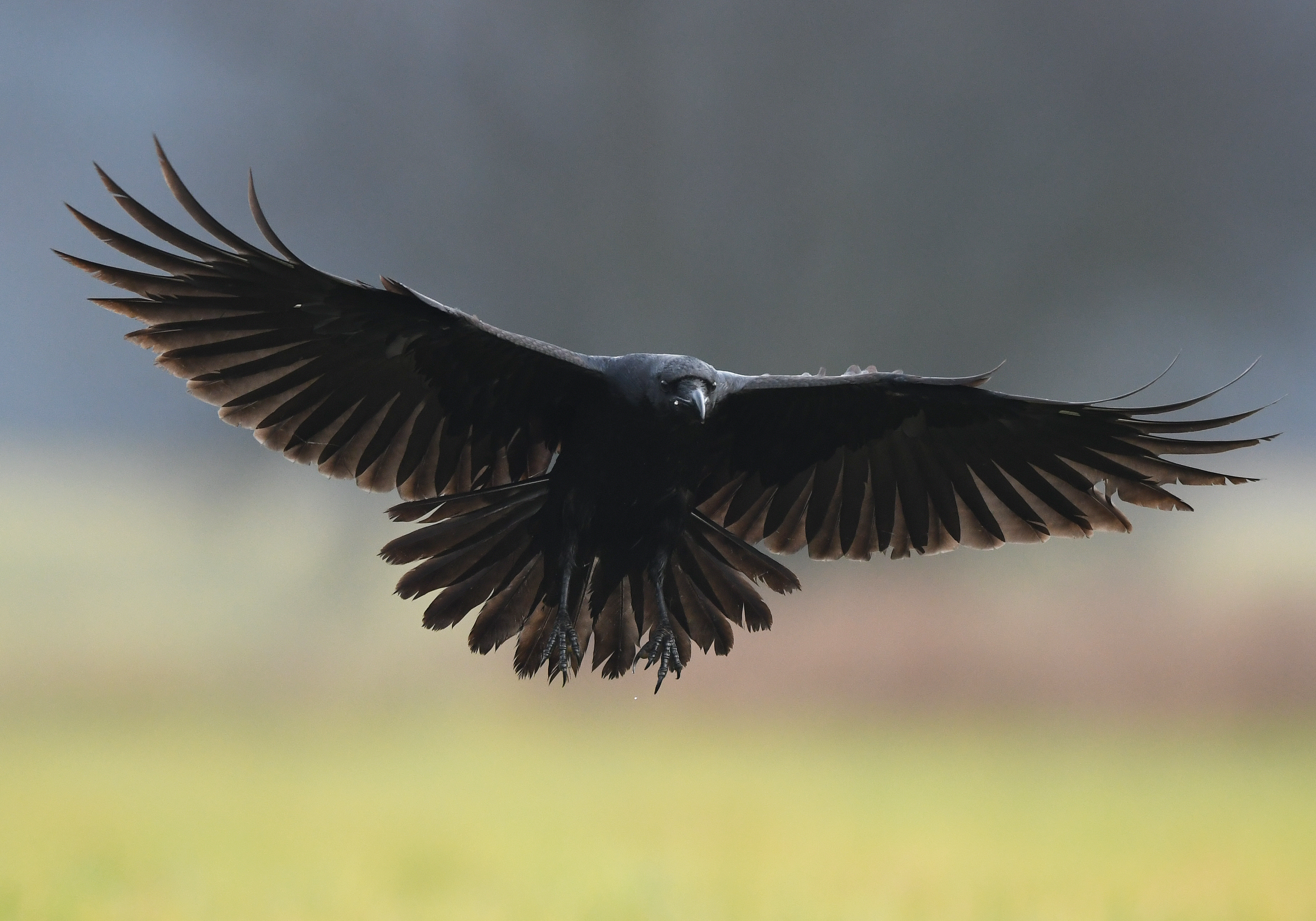
Anyway, all that aside, Ravens have a mixed history with humans. In some Native American cultures, they’re seen as tricksters, possibly because they’re aerial acrobats, even flying upside down for considerable distances. Or maybe it’s their propensity for pulling dogs’ and cats’ tails. Other cultures think of Ravens as symbols, seeing in them a physical emblem of wisdom, for example. For some Christians, though, Ravens are portents of bad things to come.
Like crows, who have learned to use available materials as tools, Ravens put the lie to the concept of birdbrains. They’re pretty smart. For instance, they team up to hunt, one Raven drawing the attention of parent birds to pull them away from nests while another steals eggs or chicks. At allaboutbirds.org, they’re described as able to put two and two together, even when the solution to the equation is a bit obscure. For instance, they’ve figured out that a gunshot could lead to a dead animal to feed on. But they ignore other sounds that are just as loud.
Ravens range over much of the North American Continent, although we don’t see them in Missouri. They like the woods and will eat just about anything, from roadkill to berries to wasted food left lying around by humans. Their large size and dark color lends them an austere look that their rather playful behavior contradicts. Like other species in their family, Ravens live without a pretty voice, settling instead for a wide variety of honks, rattles, caws, croaks and hiccups.
To watch a Raven soar, barrel-roll and somersault in flight, not to mention fly upside down, is to experience what must be a real joy in just being alive. I’ll never get the chance to ask one whether it ever gets tired of performing, but I expect it would have a one-word reply: “Nevermore.”
This is the fifth in a series of posts focused on the birds featured in my new novel, Discovery. Look for another one each week.
Thanks to allaboutbirds.org, courtesy of the Cornell Lab of Ornithology, I now know that the Lewis and Clark expedition in 1804-1806 added just three bird species to the North American count. Seems pretty paltry given the amount of ground Merriwether and William covered during their trip. Still, I was pleased to learn that the Clark’s Nutcracker is named after William Clark, who spotted it in the summer of 1805 and at first thought it was a woodpecker. Now it carries a bit of history on its flight through the high mountains of the American west.
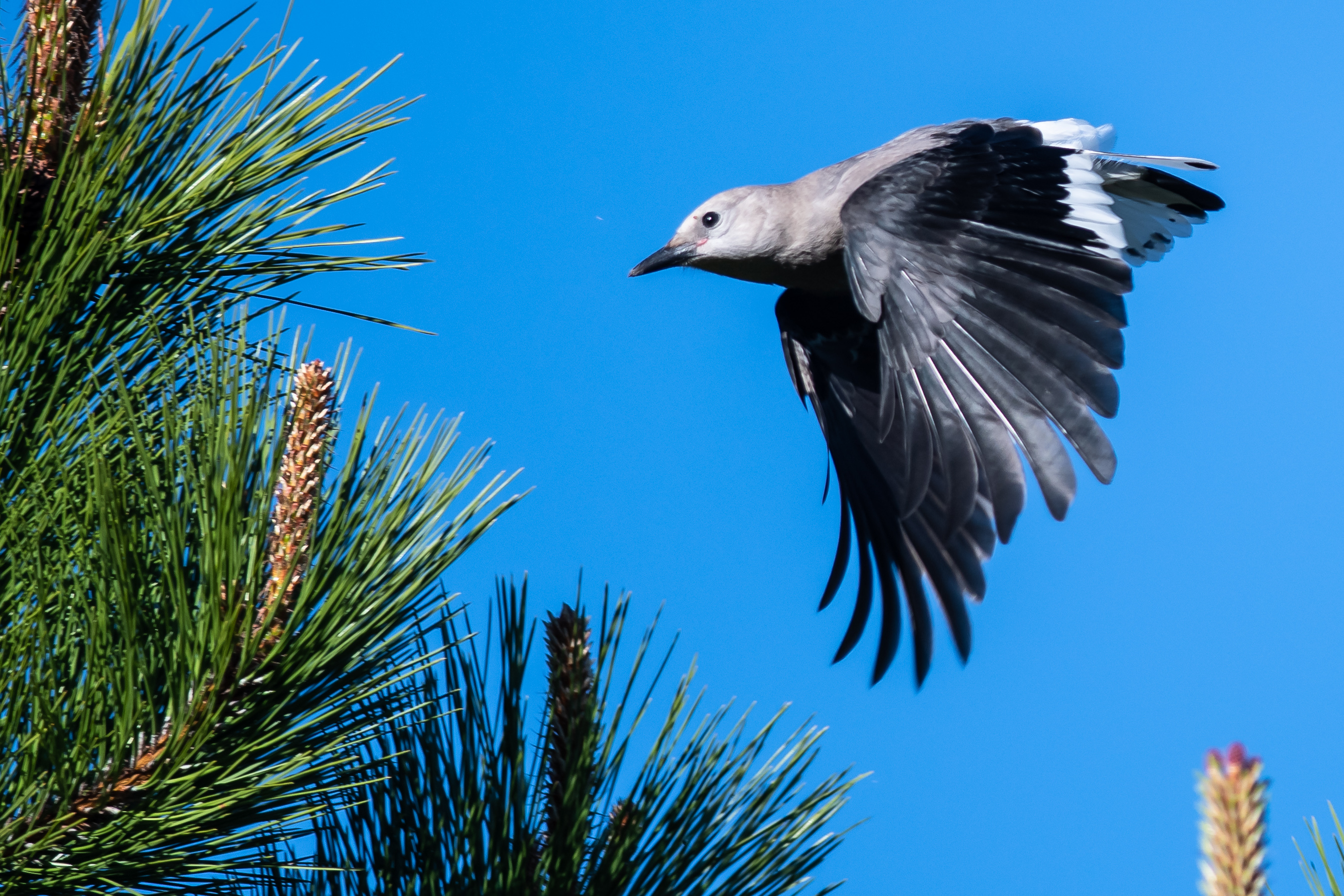
Like their relatives, the jays and crows, nutcrackers can hardly be called songsters. Their rattling squawks echoing from the cliffs don’t dazzle with their beauty. On the other hand, when it’s flying, the Clark’s Nutcracker is, as the photograph here shows, a wonder in black, white and gray. It resembles a woodpecker a little bit because of its undulating flight. I wonder if its heavy, pointed bill might also have had something to do with Clark’s mistake. The bird uses it to dig seeds out of pine cones and crack the shells.
Speaking of seeds, nutcrackers have a unique feature. Like squirrels, they possess a storage pouch. However, unlike the rodents’ cheek pockets, the Nutcracker’s is under its tongue. It can carry up to 90 seeds to stow away for the cold, snowy mountain winters. Having caches of seeds strewn about the mountainside is one reason these hardy birds are able to get a jump start on the breeding season, nesting as early as January or February.
The other reason winter breeding works for nutcrackers is pretty remarkable. Males of the species share egg-sitting duty. They even develop a brood patch, just like the females, so they’re not only able to keep the eggs warm but also split the time spent food-gathering.
Clark’s Nutcrackers like the thin mountain air. They’re often found near timberline, hanging out high in the pines or flying in a small group known as a “booby,” “ballet” or “suite,” among others. I get the “ballet” because they’re rather graceful flyers. “Suite” is less descriptive, and “booby” makes no sense to me at all. Maybe someone can explain it.
Found year-round in the western mountains, Clark’s Nutcrackers rarely stray east as far as Kansas, Missouri, Iowa and Minnesota. I’ve seen them only in Colorado, but if one decides to pay a visit to Missouri, I’ll be happy to see it. It will remind me of hikes in the magnificent high country to the accompaniment of that awful squawking.
 Bird Poop